In Wolf Hall Who Is the One Who Can Read the Entire New Testament
Wolf Hall
Reviewed by: bikerbuddy
Category: Human being Booker Prize Winner; Historical Fiction
Engagement Read: 25 June 2018
Pages: 650
Published: 2009



Wolf Hall is the first book in Hilary Mantel'due south Wolf Hall Trilogy
I read Wolf Hall in 2009 when it was first published and take reread it over this last calendar week equally part of our serial of reviews for Human Booker Prize Winners, particularly, in this case, the Golden Man Booker Prize, which is meant to represent the best of the Bookers over the first fifty years.
First, I wanted to say that I missed voting for the Gilded Booker by a couple of hours. I wanted to read or reread all the books and I had other things on over the weekend. Yes, I forgot. The irony is, I think, if I am correct, that many who vote won't take read them all and the most recent titles volition about likely garner the well-nigh votes, anyway. Nonetheless, if I had voted, I would probably accept chosen Wolf Hall.
Of the 5 finalists, Wolf Hall was the virtually immersive for me. It helps that it is far longer than any of the other nominated novels, just the book tells a familiar story from a fresh perspective, is well written, witty and dramatizes the argue effectually emergent knowledge and belief which is central to much mod thinking.
The story should be familiar to many who retrieve high school history or have enjoyed other historical fictions fix around Henry VIII of England and his wives. Henry and his Spanish wife, Katherine, after twenty years of wedlock accept produced a daughter, Mary, but no legitimate male heir to the throne. For Henry, this is not simply a slice of vanity. He has a son, Henry Fitzroy, whom he has fabricated a Duke, but he will never be male monarch since Fitzroy is illegitimate. Without a legitimate heir Henry risks plunging his state into chaos, at worst, a civil war. If he suddenly dies the question of succession will be cryptic, opening the fashion for Plantagenet or other claimants who may have the backing of strange powers. The question of succession potentially touches upon the very independence of England. Henry has decided that he needs a new, younger wife to solve this trouble, but his plan is blocked past Pope Clement. The Pope formerly gave Henry special dispensations to marry Katherine who was the widow to Henry's brother, Arthur. Now, Henry'due south chance for a union dissolution lies in a technical argument concerning consummation: did Katherine, or did she not, consummate her marriage with Arthur before he died? Katherine says she did not, which would make the wedlock contract void, leaving her gratuitous to marry Henry, equally she did. Henry argues she did complete the wedlock, thereby making the marriage not only legal, but Henry'south ain matrimony false – a legal fiction – and technically an act of incest. This would leave Henry costless to marry Anne Boleyn, whom Henry hopes will provide him that elusive male heir.
This familiar story is told from the point of view of Thomas Cromwell, Henry's correct hand man. Born into poverty as the son of a blacksmith, Cromwell does not have the social graces of many in Henry's court, but he is tenacious, intelligent and ruthless. Having seen Key Wolsey, his mentor, stripped of his office and riches because of his inability to give Henry what he wants, Cromwell is adamant to give Henry what he wants. Wolf Hall is the story of how Cromwell does that.
Cromwell existed in an historic period when society and thought were being changed by Humanist ideals, partly afflicted by the rise of commerce and the printing printing, every bit well as the Reformation, the schism in the Christian church begun by Martin Luther, who challenged the church building's say-so to dictate doctrine and who offered Christians new possibilities in their relationship with their religion and God. William Tyndale, the English language scholar who promoted his English version of the Bible during this period, hangs in the background of Wolf Hall. Rumours of his whereabouts grow, opinions on his stand up are discussed. Of course, the offset official Bible in English, the King James edition of 1611, appeared long after when England had adopted Protestantism. It may be surprising to some who remember that Henry became head of his own church, thereby rejecting the authority of the Roman church, however rejected the tenets of Protestantism during most of the flow covered by Wolf Hall. Henry, in fact, writes confronting Protestantism during this menstruation.
That's partly what makes this book so fascinating; this moment in history when idea is changing, things are in flux and later on certainties are just only forming. At ane betoken the Duke of Norfolk believes he has been cursed by Wolsey. Later, Henry believes he is being haunted by his expressionless brother. The line between the ordinary world and the supernatural is blurred. Beliefs have a powerful hold on people. Differences of opinion can exist frightening. At that place are words to draw it: seditious; heretical. For Cromwell, this means he keeps his thoughts individual, acts only when he is assured of his position and speaks nothing confronting the official line. But Cromwell clearly has a Protestant aptitude. He is a human being who can avowal knowing the entire New Attestation off past heart. He has read Tyndale's Bible. He knows there is a vast difference between the peppery fearfulness-inducing proclamations poor Christians hear at church building each Dominicus and the mild testament of Jesus which are glossed over or ignored. Privately he wonders …where it says, in the Bible, 'Purgatory'. Prove me where it says relics, monks, nuns. Evidence me where it says 'Pope'.
It is Cromwell who leads Henry to the place where he can reject Rome not just on religious but financial grounds. Meanwhile, Thomas More (famous for his book Utopia, but also a torturer of heretics) has written a volume against Luther, for which the Pope has granted him the championship of Defender of the Faith.
Until More's incarceration later in the novel for refusing the oath on the Act of Supremacy, the legislation giving Henry control of the English church building, More has never suffered a keen bargain in his life. He lost a wife and remarried, but Cromwell has lost not only his wife, but his daughters have died in his arms. Equally he makes arrangements for their burial he again reflects, Where in the Gospels does it say 'Purgatory?'
Henry's need to solve a personal trouble, his lack of a legitimate male heir, impacts upon the political future of England, and in his struggle to overcome the strictures of the Roman church his actions bear on upon its religious time to come, too. The various conflicts in the volume form a dichotomy between those who adopt or will adopt the changing religious ethics and those who will remain intransigent. Mary, Henry's girl, along with her female parent Katherine, will never bend. Anne Boleyn'southward God is politically expedient. Henry volition oppose the Pope just as Cromwell will become More's opponent in the fight to make Henry'southward solution a legal reality. Ironically, while Cromwell has kept silent most his beliefs until the times can suit them, information technology is More's silence that will condemn him. Beyond the various political machinations and bed hopping, this is where the real drama of Wolf Hall lies. It's what gives shape to the many dramatic episodes.
Every bit a practitioner of fiction, Mantel is both entertaining and subtle. Much of what she writes can be enjoyed at long stretches. Even so there are subtleties in the writing too. Ane of the moments that made me consider this was a description of George Boleyn, Anne's brother and now Lord Rochford. Rochford is more concerned with his advent than the weighty matters of the compact between male monarch and land, betwixt married man and wife and between humanity and God. Instead:
… what fascinates him is the flame-coloured satin that is pulled through his slashed velvet over-sleeve. He keeps coaxing the trivial puffs of fabric with a fingertip, pleating and nudging them and encouraging them to grow bigger, so that he looks like one of those jugglers who run balls down their arms.
This vignette recalls the description of Fundamental Wolsey's apparel, over seventy pages before, folded afterward his death:
The central'southward scarlet clothes now lie folded and empty. They cannot be wasted. They volition cutting up and go other garments. Who knows where they will get to over the years? Your middle will be taken by a blood-red cushion or a patch of reddish on a banner or sign. You will encounter a glimpse of them in a homo'due south inner sleeve or in the flash of a whore'due south petticoat.
The descriptions reminded me of the boots in All Quiet on the Western Front end, a motif that highlighted the inevitable doom of each soldier who wears them. Wolsey's apparel, cut up and recycled, are an apt metaphor for the capricious world of Henry'southward England. Wolsey, one time Henry's correct hand man, has paved the way for opportunist fops. Perhaps it demonstrates the dangers of not adapting to changing circumstances, too. Cromwell adapts.
An interesting question remains about Mantel'southward title for her book. Wolf Hall is the dwelling house of the Seymour family where Henry meets his third married woman, Jane Seymour. Jane Seymour remains a very minor character, seen here and there in the book, and is simply once discussed. However the king never makes it to Wolf Hall in the volume. It seems such a slim thing to use equally the title of such a large volume, given that the novel primarily follows the fortunes of Henry's relationship with Anne Boleyn. Only everyone knows what happened to Ann Boleyn. She was beheaded. Is Mantel'southward championship a means of reminding her readers as they read of Anne's fate and Henry'south chequered history? To an extent. I think the title also highlights an interesting parallel, too. John Seymour has brought scandal to his dwelling house. He has had an affair with his son'south wife, Catherine Fillol, and she is pregnant. By the standards of Henry's England, this is incest, the same fault Henry now believes taints him in the union to his brother's wife, Katherine. Seymour's affair is 1 of many forbidden relationships in the book. Henry intends to continue having sexual activity with Mary Boleyn while his wife (her sister) is pregnant. Archbishop of Canterbury Cranmer, a man sworn to celibacy, is secretly married to a High german Protestant and she is significant. Wolf Hall constantly explores the gulf betwixt the private and public persona, whether it exist sexual misconduct or religious. Information technology is footling wonder that a man of Cromwell's intelligence plays his cards and then close to his breast.
It is upon this that the drama of Thomas More finally plays out. More is willing to publicly acknowledge Henry's union and his daughter, Elizabeth, but he cannot swear an oath to the Human activity of Supremacy, which supplants the Pope and church building of Rome with Henry as the head of the English language church building, even if he promises not to speak against Henry or encourage others to do so. His story demonstrates the devastating intersection between idea and belief and the public persona. Like many other characters and circumstances, More than has his corollary in the book in the figure of Mary Barton, a simple girl who goes about England challenge to accept visions and making predictions against the Rex. Simply a simple want for attention or the desire to maintain one'due south own integrity is shown to have public implications. Similar the King who must produce an heir, the private is always in the public sphere.
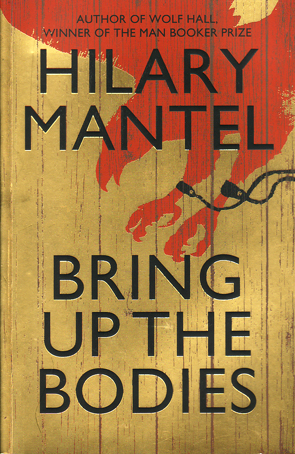
Wolf Hall is highly readable, compelling, dramatic and funny. It is peopled past a large number of characters from history. Mantel'southward grapheme listing at the front of the novel helps delineate one set of characters from another and establish their relationships. It'due south worth a read, especially since information technology leads into Mantel'southward 2d novel virtually Cromwell, Bring Up The Bodies, which deals with Anne Boleyn's downfall and too won the Man Booker Prize. Her third novel on Cromwell, The Mirror and the Low-cal is due for release in 2019, although it has already been delayed from its original release engagement.
In Wolf Hall Who Is the One Who Can Read the Entire New Testament
Source: https://readingproject.neocities.org/BookReviews/WolfHall_HilaryMantel.html
0 Response to "In Wolf Hall Who Is the One Who Can Read the Entire New Testament"
Post a Comment